
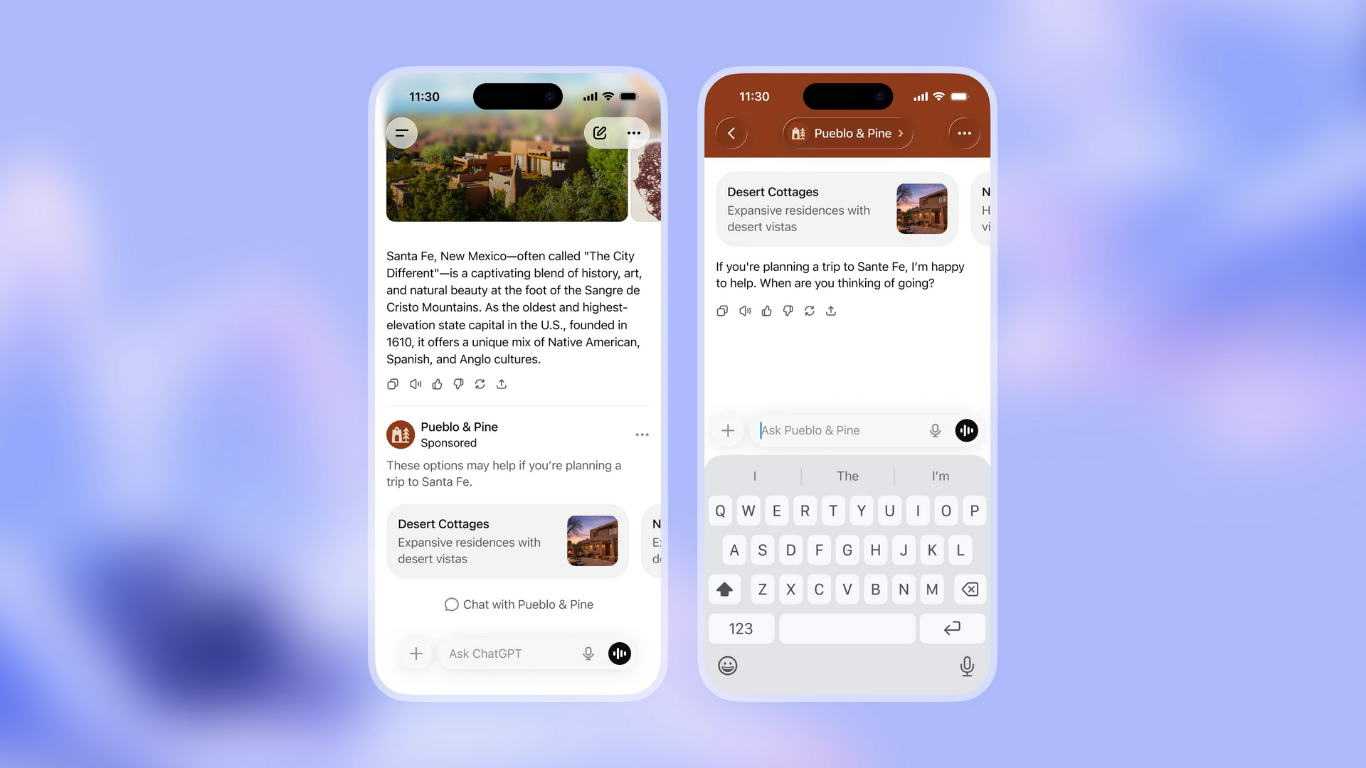

If you are a marketer and you have been following AI closely, you probably saw this coming.
ChatGPT introducing ads is not a surprise.
What is surprising is how many marketers are brushing it off like it is just another ad placement.
It is not.
This is one of those moments where, a few years from now, people will say
“yeah, that was the shift”.
This is not Google Ads. And it is not social ads.
Most ad platforms fight for attention.
Google ads show up when someone searches.
Social ads interrupt people while they scroll.
ChatGPT is different.
People open ChatGPT when they are:
- confused
- researching
- comparing
- deciding
They are not browsing.
They are not killing time.
They are looking for answers.
That context changes everything.
Ads inside an answer feel very different
In Google search, ads compete with links.
In social media, ads compete with content.
In ChatGPT, ads compete with the answer itself.
That is a big deal.
If an ad feels forced, irrelevant, or salesy, it will immediately break trust.
But if it feels helpful and contextual, it blends in naturally.
This means the old playbook will not work here.
Louder ads will not win.
Smarter, more useful messaging will.
This is closer to influence than advertising
Here is the part most marketers are missing.
ChatGPT ads are not really about clicks.
They are about shaping how options are presented.
When someone asks a question and sees:
- an explanation
- a recommendation
- a suggested brand
The influence already happened.
The click may come later.
The conversion may happen somewhere else.
But the decision started inside that conversation.
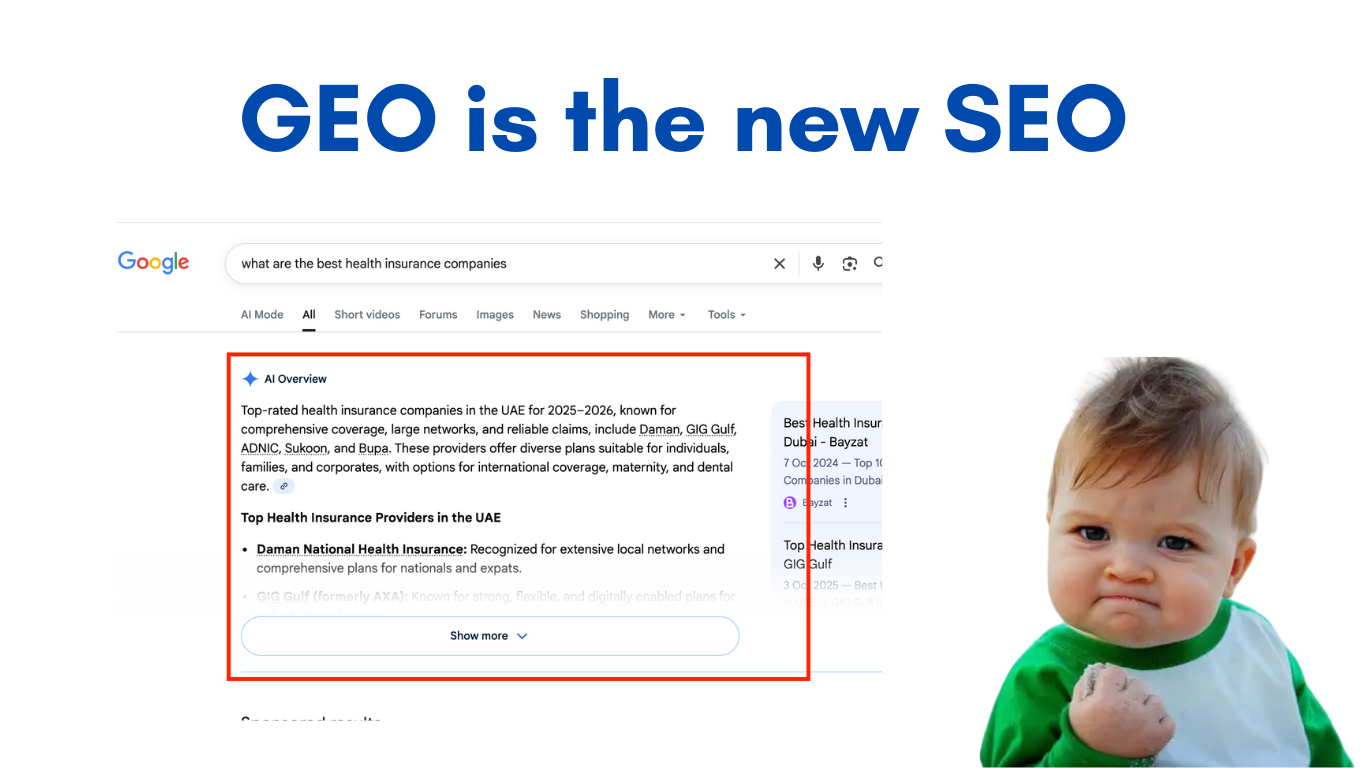
This is where GEO and paid media collide
ChatGPT ads will not exist in isolation.
They sit on top of the same system that generates AI answers.
Which means brands that already:
- explain their offering clearly
- show up naturally in AI responses
- have strong topical authority
will have a massive advantage.
Paid visibility will amplify trust, not create it from zero.
This is where Generative Engine Optimization and paid media start overlapping.
If you are a marketer, this is the signal
You do not need to run ChatGPT ads tomorrow.
But you do need to start preparing for this shift.
That means asking better questions:
- Would my brand make sense inside an AI answer?
- Does my messaging help or just sell?
- Is my content clear enough for AI to understand and trust?
- Am I building authority or just chasing placements?
Marketers who think this way early will adapt faster.
The rest will scramble later.
This will affect search, ads, content, and brand building together.
Why this matters more than it seems
ChatGPT ads are not just a new monetization feature.
Right now, they are being tested in limited environments, primarily in the US.
Like most major ad platforms, this is how it usually starts.
Small rollout.
Controlled testing.
Feedback loops.
And then, once the system is stable, it expands.
We have seen this pattern before with:
- Google Search ads
- Meta ad formats
- Performance Max
- AI-driven placements
By the time it becomes widely available, the early advantage is already gone.
This is the preparation window
That is why this phase matters.
Not because everyone can run ChatGPT ads today.
But because this is the preparation window.
This is the time to:
- understand how ads might appear inside conversations
- observe how AI frames recommendations
- align your messaging with how answers are generated
- build clarity and authority before paid visibility scales
When this rolls out globally, brands that prepared early will move faster.
Others will be trying to catch up.
How I am looking at this shift
I am not looking at ChatGPT ads as something to rush into.
I am looking at them as a signal of where marketing is headed.
Right now, the testing is happening in the US.
Next, it will expand.
And eventually, it will become part of the normal marketing mix.
At Digital Striver, I am documenting these shifts as they unfold.
What is being tested.
What changes.
What signals to watch.
Not predictions.
Patterns.
Closing
ChatGPT ads are not here to replace existing platforms overnight.
But they are a clear sign that conversational AI is becoming a commercial environment.
Marketers who pay attention now will not be surprised later.
They will be prepared.
This is how modern marketing works.
Leave a Comment