
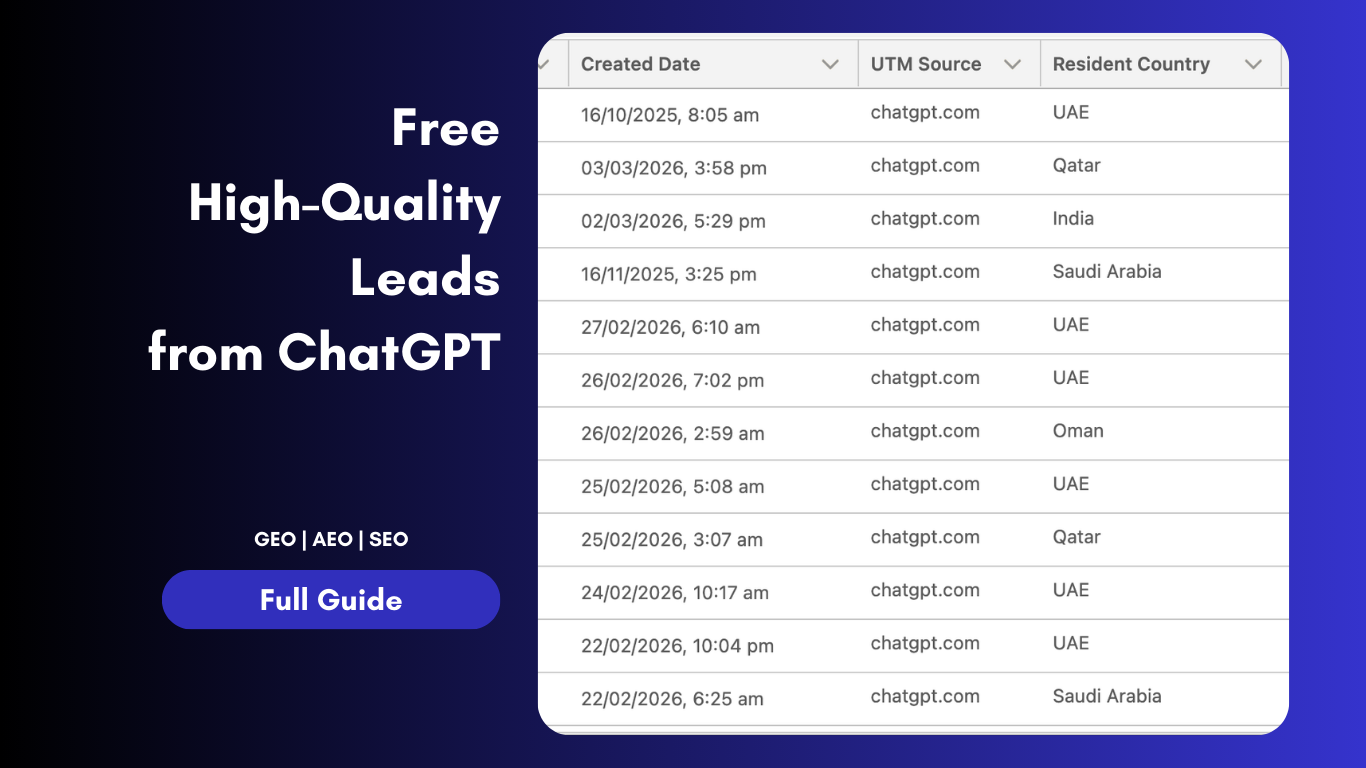

Over the last few months, I started noticing something unusual inside my CRM dashboard.
A new traffic source kept appearing.
chatgpt.com
Not Google.
Not Instagram.
Not YouTube.
AI platforms.
When I tracked it properly using UTM parameters, I realized something important. These were not random visitors. These were high intent users. People who were actively asking questions inside ChatGPT and landing on my website for deeper information.
That is when it became clear to me. If we are not preparing our websites for AI discovery, we are quietly losing visibility.
This is where GEO comes in.
What Is GEO
GEO stands for Generative Engine Optimization.
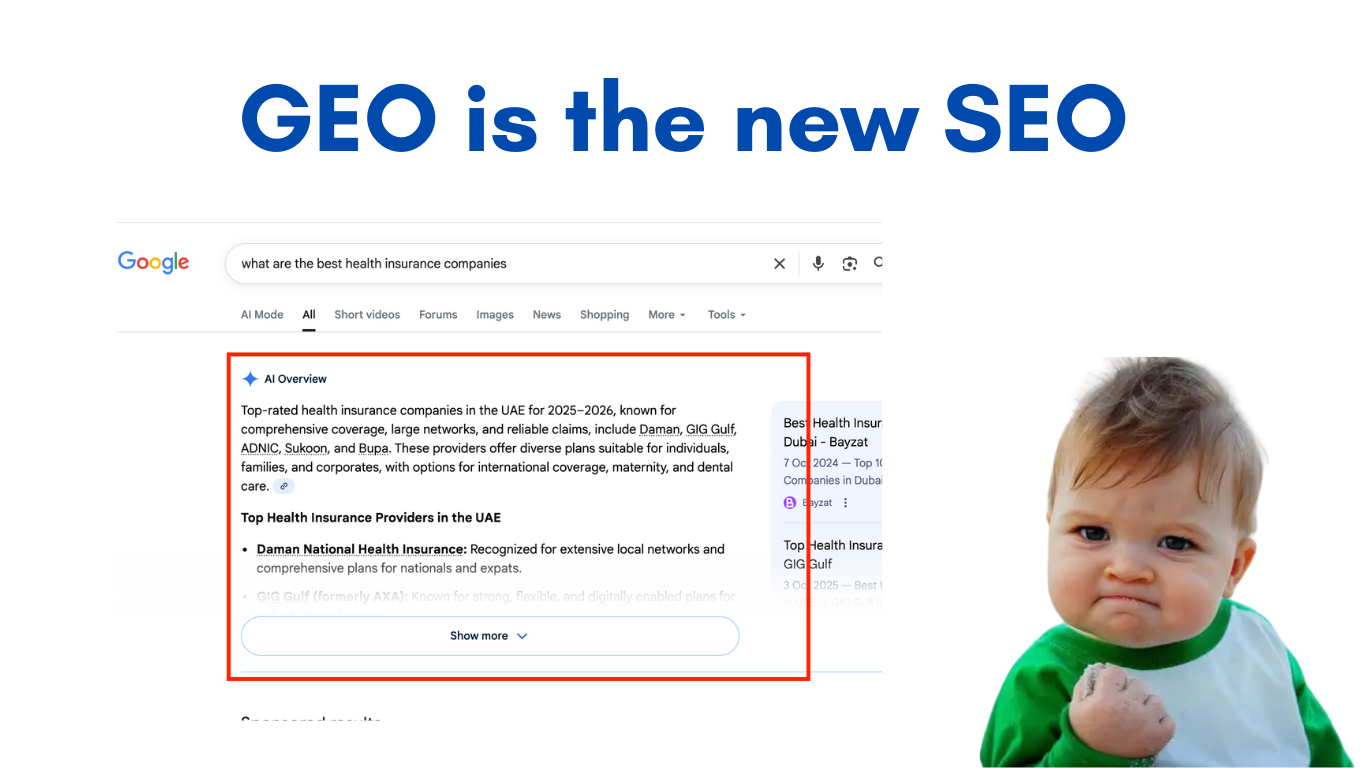
It is the process of optimizing your website so that AI tools like ChatGPT, Gemini, Perplexity, and Claude can understand your content and reference it when answering users.
Traditional SEO focuses on ranking pages on search engines.
GEO focuses on being included inside AI generated answers.
Instead of competing for blue links, you are positioning your brand to become part of the response itself.
This is a different game.
Why GEO Matters Right Now
AI tools are changing how people search.
Instead of typing keywords into Google and clicking through multiple websites, people now ask direct questions inside AI platforms and get summarized answers instantly.
These platforms:
- Explain
- Compare
- Recommend
- Simplify complex topics
- Provide step by step instructions
If your content is structured correctly, AI systems can pull your insights into their responses and send users directly to you.
From my own tracking, AI traffic is not low quality. It is focused. These users are already thinking deeply about a problem.
That makes GEO a serious opportunity.
How AI Platforms Choose Content
AI systems do not rank content the same way Google does.
They retrieve, analyze, and synthesize information.
They prefer content that is:
- Clearly structured
- Contextually relevant
- Factually grounded
- Written with authority
- Focused on specific topics
- Supported by real examples
If your website is vague or poorly structured, AI systems struggle to understand it.
If it is clear and authoritative, you increase your chances of being referenced.
Step by Step Guide to Optimize Your Website for GEO
1. Write Around Questions
AI tools respond to questions. So your content should reflect that.
Instead of writing broad keyword focused titles, write clear question based headings.
For example:
What Is Generative Engine Optimization
How Does GEO Work
Can Small Businesses Benefit from GEO
Then answer the question directly in the first few sentences. After that, expand with deeper explanation.
This makes it easier for AI systems to extract your content accurately.
2. Use Clean Structure
Structure is critical.
Use:
- Clear headings
- Bullet points
- Numbered lists
- Tables when necessary
- Short paragraphs
Avoid:
- Long blocks of text
- Overly emotional storytelling
- Vague statements without substance
Think of it this way. If an AI had to quickly scan your article to understand it, would it struggle?
Clarity improves your chances.
3. Share Real Experience
Generic advice rarely stands out.
If you have real data, use it.
For example, instead of saying AI traffic is growing, say that you tracked inbound leads from chatgpt.com inside your CRM using UTM sources and noticed a steady increase in qualified leads.
Specific examples build trust.
Trust increases the likelihood of being referenced.
4. Build Topical Authority
AI systems look beyond one single article. They analyze your entire website.
If you want to improve GEO, you need depth.
If your niche is digital marketing, write about:
- Analytics
- Conversion tracking
- Attribution models
- AI search trends
- Content strategy
- Technical SEO
Interlink them properly.
When your website consistently talks about one area with depth, you build authority.
Authority increases discoverability.
5. Define Concepts Clearly
Whenever you introduce a new concept, define it simply and directly.
For example:
Generative Engine Optimization is the practice of structuring and publishing website content so AI driven platforms can understand and reference it in their responses.
Definitions increase clarity. Clarity improves extraction.
6. Make Your Brand Clear
AI systems understand entities such as people, brands, and organizations.
Make sure your website clearly mentions:
- Who you are
- What you do
- Who you help
- What topics you specialize in
For example, Digital Strivers is a community built for those who strive online, focused on helping creators and entrepreneurs grow in the digital space.
When your brand identity is clear, AI platforms can associate your name with specific expertise.
7. Strengthen Technical Foundations
GEO still depends on strong basics.
Make sure your website has:
- Fast loading speed
- Mobile responsiveness
- Clean HTML structure
- Secure HTTPS
- Proper schema markup for articles and FAQs
Technical health supports content visibility.
8. Publish Original Insights
If your content sounds like everyone else, there is no reason for AI systems to prioritize it.
Share:
- Case studies
- Personal experiments
- Unique frameworks
- Observations from your industry
Even small original insights can differentiate you.
Originality increases authority.
9. Add FAQ Sections
End your blogs with frequently asked questions.
Answer them clearly and directly.
This increases the chance that your content matches real user prompts inside AI platforms.
Example:
Can small websites benefit from GEO
Yes. Because AI systems prioritize clarity and relevance, focused niche websites can compete effectively even without massive domain authority.
10. Track AI Traffic
Most people are not even looking at this data.
Check your analytics and CRM for referral sources like:
- chatgpt.com
- perplexity.ai
- gemini.google.com
If you see traffic, it validates the opportunity.
If you do not, it signals that you need better optimization.
A Simple 30 Day GEO Action Plan
Week 1
Audit existing content and improve structure. Add definitions and FAQs.
Week 2
Publish two in depth blogs around your main topic. Strengthen internal links.
Week 3
Add case studies or real data driven content. Improve website speed and schema markup.
Week 4
Review analytics. Track AI referrals. Refine and expand your authority cluster.
Consistency matters more than speed.
The Bigger Shift You Should Pay Attention To
We are moving from search engines to answer engines.
People increasingly want direct answers.
If your brand is not part of those answers, you lose visibility before users even consider clicking.
GEO is not a trend. It is a shift in discovery behavior.
If you are building online, you need to adapt early.
Inside Digital Strivers, the focus has always been clear. It is for those who strive online. The goal is to understand where digital growth is heading and prepare before the majority catches up.
If you implement GEO properly, you position yourself for long term visibility in an AI driven world.
Written by
Muhammed Ijas
Founder of Digital Striver
Helping digital builders adapt to the next phase of online growth

Leave a Comment